ServiceNow has recently launched new customer relationship management (CRM) capabilities. Described as a solution designed to break down the silos that traditionally limit CRM success, the ServiceNow platform is unified, and collaborative. The question is, however, is this CRM any different from those that have gone before – will it genuinely complement an existing deployment, particularly when it comes to managing the customer service lifecycle. As customer expectations continue to rise – McKinsey found that customer delight builds loyalty and increases revenue – siloed systems are simply inadequate which means any CRM that breaks the walls, is a strategic investment.
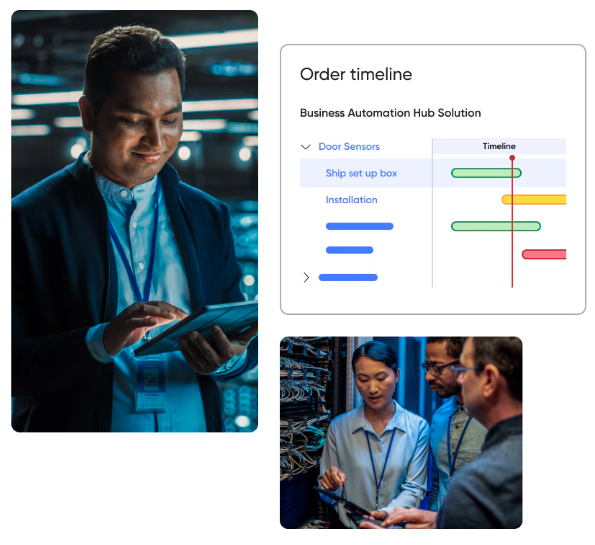
The ServiceNow CRM differentiates itself by starting with the existing customer, a perspective that fits perfectly in industries such as financial services or retail. Unlike traditional CRMs, which often originate from lead generation, ServiceNow builds on what already exists within the business. In banking, for example, where retaining and deepening relationships with current clients drives growth, this focus is a natural advantage. By connecting sales, service and operations, the technology has the potential to manage ongoing client interactions and both simplify and enhance processes such as client onboarding and issue resolution.
Another key strength of the CRM from ServiceNow is its unified platform. It’s promise to dismantle silos means integrating front-office sales teams, mid-office operations, and back-office support into a single ecosystem. Imagine a customer applying for a mortgage: traditional CRM platforms may track the initial lead, but ServiceNow streamlines the entire journey from loan fulfilment to customer enquiries to post-sale servicing – all on one platform. It is a level of end-to-end connectivity that could reduce resolution times, deliver personalised experiences and boost client satisfaction which are critical metrics when it comes to customer service, regardless of industry.
Cost-efficiency and vendor consolidation further support the ServiceNow CRM case. When a company is juggling multiple systems this drives up maintenance costs and increases complexity. A unified platform has the potential to consolidate these tools, lowering the organisation’s total cost of ownership (TCO) while simplifying IT management. For a large bank, where operational efficiency is paramount, this is a persuasive argument. Fewer vendors means streamlined support and reduced integration headaches – benefits most CIOs will appreciate.
The infusion of Agentic AI into the ServiceNow CRM has the potential to increase customer experiences and efficiencies. In banking, AI-driven insights can predict customer needs – taking the conversation back to the mortgage application, for example, the AI could offer a tailored loan option based on the customer’s transaction history while automating routine tasks. It aligns with the vision of an interconnected enterprise model where the supply chain, finance, IT, sales, operations and partners operate seamlessly.
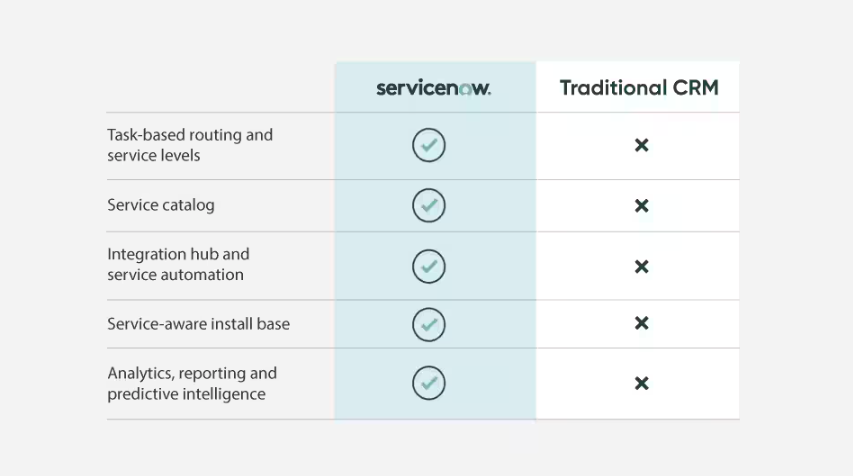
Finally, the ServiceNow track record is important. The solution’s holistic approach to customer lifecycle management, built on a proven platform that has delivered value to organisations across key IT workflows, is a logical extension of a company’s customer service management (CSM) capabilities. It’s not just a CRM, it’s a CRM+ platform that can unify customer-facing and operational processes within a trusted ecosystem.
This new, unified, customer-centric solution has the potential to enhance the service lifecycle, reduce costs, and build on proven platform strengths while benefitting from ongoing investment and AI. This makes it an exciting change to the CRM story – one that may finally remove the challenges of silos and replace them with interconnected visibility that exceeds customer expectations and drives company growth.
Think beyond traditional CRM E-book
CRM is focused on sales—not service. Go all-in with an end-to-end service solution that meets today’s high customer expectations.
- How traditional CRMs are not meant to serve customers effectively
- The advantages of end-to-end solutions for seamless quality experiences
- The options for integrating into current systems
Need help navigating your CRM journey?
Speak to our customer advisory team around all things Customer and get practical tool and advise to take the next step on your journey.


![Agentic AI isn't coming to enterprise in 2026. It's already here[1]. ServiceNow's leadership is clear: the conversation is no longer whether autonomous agents belong in your organization, but how far and how fast you can safely deploy them[1]. This shift changes everything. AI agents are moving beyond simple assistance, answering questions, following instructions. In 2026, they'll own multistep workflows end to end, making judgment calls and resolving complex issues autonomously[1]. For enterprises in telecommunications, public sector, energy, financial services, and large IT operations, this represents both an enormous opportunity and a clear execution challenge. The organizations that will move fastest—and capture the most value—are those that treat agentic AI not as an incremental upgrade, but as a platform-wide transformation requiring new governance models, team structures, and ways of working.](https://www.quintica.com/wp-content/uploads/2025/12/Screenshot-2025-12-22-at-23.51.44-350x200.png)